Showing posts with label Food. Show all posts

Wednesday, April 23, 2025

A to Z - Day 20 - Tamarind

Photo credit: Deccan Herald

Here's a tangy delight, with its presence in flavourful cuisine and ecological landscapes. Whether it’s a steaming bowl of sambhar or supporting biodiversity, tamarind deserves a moment in the spotlight.

FOOD 

Tamarind is one of the main ingredients in the popular puliyogare (tamarind rice). It's a comfort food, a festival staple, and a train journey favourite.

Then there’s bisi bele bath, a warm, hearty dish where tamarind brings balance to the heat of chillies and the creaminess of lentils.

It is also an ingredient in Ugadi pachadi (a traditional dish representing different flavours of life).

There is also tamarind chutney, pickles, and rasam!

It has also been used in traditional medicine for treating digestive issues, sore throats, and even wound healing.

Tamarind pulp is rich in antioxidants, magnesium, fibre, and iron, making it a nutritional powerhouse. 

BIODIVERSITY

Karnataka is a major producer of tamarind, with regions like Vijayanagara district being known as the ‘Land of Tamarind’. The fruit is harvested between January and May.

These majestic, sprawling trees play a vital role in Karnataka’s urban and rural landscape.

For one, they provide shade and shelter. They also support local ecosystems, offering a home to birds, bees, and countless small creatures. Plus, their deep roots help prevent soil erosion, making them nature’s very own conservationists.

Beyond food, tamarind kernel powder is also used in the textile and leather industries, while its seeds are processed for coffee substitutes and gum production.

So, whether it's in the kitchen or the forest, tamarind is quietly powerful, bringing flavour and sustainability. 

Next time you enjoy a tamarind-laced dish, you should appreciate the depth of its story, ranging from taste buds and health to ecosystems!

(This post is part of the A to Z Challenge. The theme is environment.)


Monday, April 25, 2022

Day 21 -- Umami


Umami is the fifth basic taste, in addition to sweet, salty, sour and bitter.

This taste was discovered by a Japanese chemist and professor at the Japanese Imperial University Kikunae Ikeda way back in 1908. 

The research that led to his discovery was the result of a feeling he had that the popular Japanese dish 'kombu dashi' had a taste that didn't exactly belong to the four known tastes. 

This dish is a form of broth made of kelp, a type of seaweed. Finally, Ikeda was able to trace this unique taste to glutamate, an amino acid.

Now umami has been officially recognised by scientists around the world as the fifth basic taste.

What contributed to the official confirmation of umami as the fifth basic taste was the discovery, exactly 20 years ago, in 2002, that there are specific taste receptors in our taste buds that do respond to amino acids.

Amino acids are one of the building blocks of proteins in our body.

Glutamates are commonly found in a variety of food like mushrooms, ripe tomatoes, Chinese cabbage, spinach, cheeses, shrimp pastes, fish sauce, soy sauce, fish, shellfish, etc.

The umami taste is said to be best provided by monosodium glutamate or MSG, a more stable powdered form obtained by adding sodium. Arguably, the most famous commercial MSG-based product is the condiment Ajinomoto. 

MSG has been controversial since 1968 when it was reported that it could be behind certain health issues. A large number of studies have been done, but it hasn't been conclusively proven, though some people do react adversely to MSG.

It is said that one of the reasons why we generally crave for food like cheese and chips with ketchup is the presence of glutamate, and thereby the umami taste.

Source:

-----------------------------

This post is part of the blogging challenge in April every year, wherein bloggers put up one post a day, from A to Z, every day except Sundays. 

I'm participating in #BlogchatterA2Z. I am also on A2Z April Challenge.


Thursday, April 14, 2022

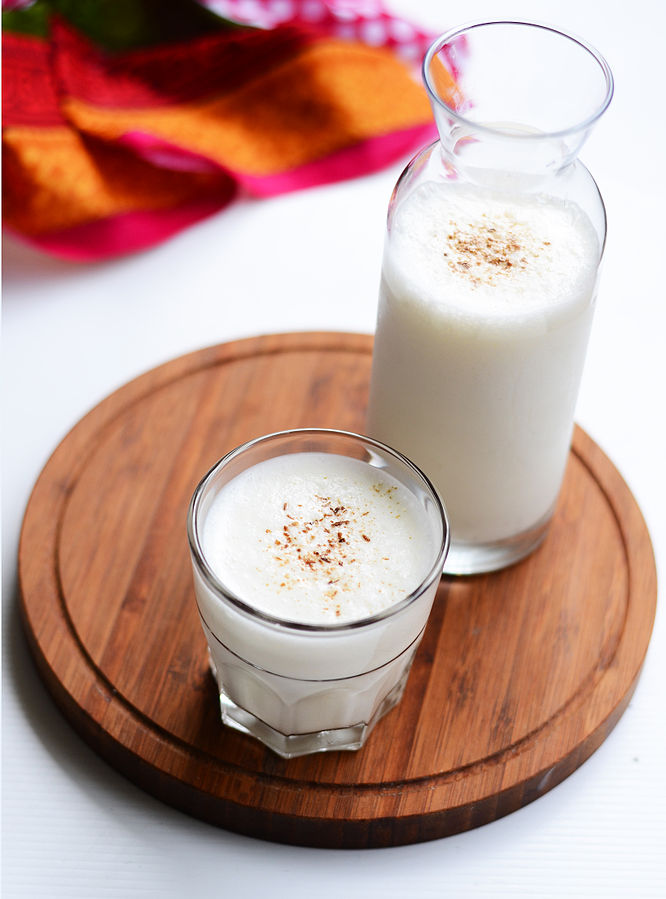
Day 12 - Lassi, the cool comfort

Salt lassi. Courtesy: Wikipedia

A word starting with L? 

Today, in this hot weather, I can't think of anything other than lassi -- so cooling, comforting and relaxing!

It is a mixture of yogurt, water, spices and sometimes fruit.

It's more popular in north India though available all across the country.

It not just cools the body and reduces the chances of sun stroke, it's a healthy drink since it has lot of good bacteria that ensures a healthy alimentary system, besides proteins that help strengthen our muscles.

There are different types of lassi, depending upon what is added to it. From sweet lassi and salty lassi to mango lassi to strawberry lassi.

A few months ago, a foodie did a bizarre experiment by mixing such diverse stuff like green chillies, honey and Toblerone chocolate to yogurt, milk, and a little milk powder in a blender. 

An Instagram video of it got widely shared. I have no idea of how it tastes. Someone can try it out!

Writing this short post has left me craving for a glass of lassi. There is a Lassi Shop nearby. And, I am heading there right away, to celebrate the 12th letter of the English alphabet!

--------------------

This post is part of the blogging challenge in April every year, wherein bloggers put up one post a day, from A to Z, every day except Sundays. 

I'm participating in #BlogchatterA2Z. I am also on A2Z April Challenge. 

Wednesday, April 21, 2021

#AtoZChallenge - Raagi Mudde

This month, each day, except the four Sundays, I will be blogging about interesting features associated with Bengaluru, formerly known as Bangalore, as part of the Blogging from A to Z April Challenge

This is perhaps one of the simplest meals and very popular in Karnataka, and parts of Andhra Pradesh. Raagi is finger millet and mudde is a lump.

It's made by adding water to finger millet flour and steam cooked and later rolled into soft lumps. Though it sounds simple apparently you need some experience to get the right consistency for the mixture.

With good content of fibre, calcium, phosphorus, potassium and iron, it is considered quite nutritious and is commonly had as a wholesome meal along with some curry like sambar or chutney.

It's claimed that it helps in controlling diabetes, anaemia, improving bone density, etc.

Interestingly, this was once considered "the poor man's breakfast cereal" but now is a very popular dish across social strata.

There are plenty of websites that tell you how to make it. A couple of them are this and this


Tuesday, April 20, 2021

#AtoZChallenge - QSRs

This month, each day, except the four Sundays, I will be blogging about interesting features associated with Bengaluru, formerly known as Bangalore, as part of the Blogging from A to Z April Challenge

Quick Service Restaurants. That's the food industry term for what is popularly called fast food joints.

They are of course not unique to Bengaluru. They are all over the world -- the likes of KFC, McDonald's, Subway, Burger King, etc.

There now numerous Indian versions of these that can be found wherever there is a good gathering of people. Some of them are big chains but a vast majority of them are very small outlets doing business in only a particular area. 

The first QSR in India arguably came up in Bengaluru, long before the city transformed itself into a crowded metropolis. 

An entrepreneur named Prabhakar R -- who got inspired by the fast-food chains during his trips abroad -- incorporated the QSR model at his brother-in-law's Cafe Darshini in Jayanagar in south Bengaluru in 1983, says this article in The Times of India.


It later closed down and then came the Upahara Darshini. The word Darshini later became synonymous with fast food joints in Bengaluru. So we have Indira Darshini, Amrutha Darshini, Vaibhav Darshini, Ganesha Darshini, etc.

Ever since that there has been a revolution of sorts in the Darshini sector, especially from the late 1990s, when the IT boom struck the city. And now there are many that don't have the word Darshini in the name of the restaurant.

The menu in a Darshini is a vegetarian fare -- generally, idli, dosa, vada, upma and other rice or wheat-based dishes, plus tea or coffee; and they are served quickly and are very affordably priced. 

Most of them have very limited seating capacity, and you will have to have the food standing at a table that is shared by others. 

It is also a sort of social leveller as one can find people from all social strata at a Darshini, quickly grabbing a bite and moving on.

(Tomorrow, we look at a very popular wholesome meal.)

Saturday, April 17, 2021

#AtoZChallenge - Obbattu

 (This month, each day, except the four Sundays, I will be blogging about interesting features associated with Bengaluru, formerly known as Bangalore, as part of the Blogging from A to Z April Challenge)

Obbattu is a very popular sweet dish. It's known by different names depending on the State. Here in Karnataka, it's also called holige. In Kerala, it's boli, and in many other places puran poli.

It's a sort of flatbread, made of wheat flour or chana dal (chickpea lentils) or maida (refined wheat flour). Other ingredients include turmeric powder, grated coconut, jaggery or sugar, cardamom powder, salt, cooking oil, etc.

There are so many regional variants of this.

Image courtesy: The Times of India

 Though it can be made and had at any time, it's a very common dish during festivals or joyful occasions like weddings. There are plenty of websites that tell you how to make it. Here's one - Archana's Kitchen.

(In the next part in the series, on the 19th, we again go back in time and look at something historical.)


Wednesday, April 7, 2021

#AtoZChallenge - Filter coffee

(This month, each day, except the four Sundays, I will be blogging about interesting features associated with Bengaluru, formerly known as Bangalore, as part of the Blogging from A to Z April Challenge)

There are various types of coffee (or kaappi, as it's called in many south Indian languages) depending on how the beans are roasted, ground, and how the drink is brewed. 

So, there is, to name a few, Espresso, Cappuccino, Latte, Instant, Americano, etc. I am sure there are many more. 

There are a few other varieties that are very (south) Indian in nature, like Black Coffee, Bella (Jaggery) Coffee, Karupatti (Palm Jaggery) Coffee, Chukku or Sukku (Ginger) Coffee etc. 

Then, there is the Indian Filter Coffee. 

SOUTH INDIA LINK

Coffee, and more specifically filter coffee, is more popular in the south of the country than in the north. Not surprising, because it's said that coffee was first grown in India, in the Chikkamagaluru district, of Karnataka in south India.

The legend has it that the Sufi saint Baba Budan, during a visit to Yemen was so impressed with the taste of coffee that he smuggled some seeds back home and planted them in the hills of Chikkamagaluru on the Western Ghats.

THE FILTERING

As the name suggests, the process of making the coffee involves a filtering process in a two-layer filter pot. 

The coffee powder (which is usually a bit more coarse than the ones used for other varieties) is put in the upper vessel, pressed to make it compact, a little boiled water poured into it and the mixture is allowed to percolate through the perforations in the top vessel into a lower one.

One or two teaspoons of the concentrate (depending on how strong or light coffee you want) in the lower vessel are taken in a glass and boiling milk added to it, and if needed, some sugar. There you have the filter coffee.

Image source: Rajshree Food/Youtube 
The video, from which the above screenshot has been taken,
explains how one can make filter coffee at home. 

Filter coffee is typically served in a small steel glass placed on a tumbler. Coffee is poured from the glass into the tumbler and back into the glass from a height many times. That's an art. It's done for two reasons: one, so that the decoction, milk and sugar mix well, and two, the coffee becomes frothy and gains a different taste.

Brazil and Vietnam are among the top producers and exporters of coffee in the world. According to India Brand Equity Foundation, India is the third-largest producer and exporter of coffee in Asia and the sixth-largest producer and fifth-largest exporter of coffee in the world.

COFFEE HOUSES

Coffee, more so filter coffee, was popularised in India by the restaurant chain, Indian Coffee House. It was originally India Coffee House. The first outlet was opened in Bombay in 1932 and around 50 others came up across British India. Later, the chain was closed down.

Encouraged by Kerala's famous Communist leader A K Gopalan, some workers of the India Coffee Board (a government organisation to promote coffee production) formed a cooperative at a meeting in Bangalore in 1957 and renamed the restaurant chain as Indian Coffee House. Different branches across the country are run by different workers' cooperative societies. There are hundreds of them across the country.

One of the Coffee House outlets.
Image source: Indranil Bhoumik/Mint 

There was one landmark outlet on M G Road in Bengaluru. It had to close down in 2006 after the workers' cooperative society lost a legal battle with the owner of the building to stay on that premises. A few months later, it reopened on nearby Church Street.

The ambience of a Coffee House is something very unique. It attracts not just coffee lovers (they serve tea too) but also artists, poets, writers, intellectuals, philosophers, etc. Very often, it's not about the food or drink, it's about the conversations in the Coffee House. It's a place where many ideas related to liberal movements in India have been discussed, and given shape.

(From the Coffee Houses, tomorrow we move to a market area that is one of the oldest in the city.)


Thursday, April 1, 2021

#AtoZChallenge: Avarakai Mela

(Through this month, join me as I take you through various features associated with Bengaluru, formerly known as Bangalore)

Avarakai is a Tamil word for a type of beans. Mela in many Indian languages means a festival. 

Avarakai mela is an annual festival of beans held at V V Puram (also called Food Steet) in South Bengaluru usually in December-January. It didn't happen this year for obvious reasons.

During this festival, you get not only fresh beans from the farms but also many dishes that are made from avarakai, which is rich in fibre and proteins.

Source: The Hindu
The dishes are all the familiar ones -- dosas, idlis, vadas, jalebis and other sweets. But the essential difference is all of these have avarakai, lending them a totally different taste.

The festival was started in 2001 by the owners of Vasavi Condiments. At first, this gathering was only for the employees of the company. Later, it grew into a much popular festival.

It's during December-January that there is a surplus of avarakai. Farmers aren't always able to sell all of their produce, leading to wastage. According to one of the organisers, the festival originally came up as a solution for the problem the farmers faced -- an occasion to showcase fresh farm-fresh avarakai and also those yummy dishes.

This popular gathering lasts nearly a month, around 200,000 people visit annually. 

By the way, the city is said to have got its name from "boiled beans". The legend has it that sometime in the 11th century, a king lost his way, and a woman served him boiled pulses. The king referred to the place as "benda-kaal-ooru" or town of boiled beans. That metamorphosed over time to Bengalooru and then Bengaluru.

References:

Avarekai anecdotes -- The Hindu

Bangalore's Avarekai Festival - Explocity

In Bengaluru, an ode to broad beans at the Avarekai Mela -- Indian Express

(In response to the comment below by Josna, the post has been revised to include a web link as attribution in the sentence that talks about the origin of the festival.) 


Monday, April 27, 2020

W for Wheat Dosa - My favourite things to counter COVID-19 stress

(This post is part of the A to Z Challenge. I am writing this month on activities that keep me refreshed during these depressing days. It's Day 23 today.)

Dosa is a popular breakfast item. Though this pancake is a south Indian dish, it's much sought-after across India as well. It's made out of batter usually of rice and black gram. Dosa is very similar to crêpe, which is of French origin.

However, what I like to make, and have for breakfast is the wheat version. A very basic recipe would be this. Make the batter by adding water to a few scoops of wheat flour, and stirring continuously until the mixture becomes viscous without any lumps.

Then add a little bit of salt. Spread a thin layer of cooking oil on a pan and let it get heated.  Spread a ladle full of the batter in a circular shape on the pan. Flip the dosa multiple times so that both sides get cooked well and evenly. It takes a few minutes. That's it.

What I have noticed is that wheat dosa is well known only in Kerala. Some of my non-Kerala friends haven't even heard about it. What about you?

Monday, November 22, 2010

Jan Ahaar, a let-down.

Ernakulam Jn (South) railway station has a new neat-looking Jan Ahaar restaurant of IRCTC. When I checked half an hour back, it had nothing listed in menu, except idly-vada. Not surprisingly, there were no customers. Misleading menu is a big put-off. Nearby restaurants had much more & were crowded. Bad show by IRCTC here, though I am quite impressed by IRCTC's online reservation system. I am a big admirer of IRCTC, so this Jan Ahaar was a big let-down.