Showing posts with label Politics-World. Show all posts

Tuesday, March 17, 2026

When 'quick' wars go wrong

A neighbourhood in Tehran that was hit by airstrikes
on March 15. -- Image courtesy: The New York Times

A few restaurants that had shut down in my neighbourhood have now reopened. They had downed their shutters a few days ago after the government abruptly stopped the supply of commercial LPG cylinders, following the shortage of Liquefied Petroleum Gas induced by Gulf War 3.0.

The government took this decision to prioritise the supply of these cylinders for households. But most of the eateries are working at reduced capacity and they have switched to food items that don't take time to cook.

Though it looks like the "commercial LPG cylinder" issue is getting resolved, its ripple effects are being felt all across. The income of many daily wage workers would have been obviously affected. Businesses that supply vegetables and fruit to these restaurants have seen less sales, thereby impacting their income. 

So far at least, there has been no shortage of petrol or diesel.

The government is in talks with Iran to ensure that supplies aren't affected. However, it is not easy to get Iran to offer concessions; their strategy is to make life difficult for nations friendly to the US, hoping they will, in turn, pressure the US to end the war it started.

The US asking its allies to send warships to force Iran to open the Strait of Hormuz defies reason. Because this is a war no one other than Israel and the US wanted. The US didn't consult any of its allies before embarking on this adventure, despite being forewarned about the repercussions. It now appears that those warnings were prescient.

Iran has been debilitated to a great extent, no doubt. But the point being missed is that whatever has been destroyed can be rebuilt.

Clearly, the hypothesis upon which this war was launched has been disproved. The hope that the removal of the dictatorial and repressive Supreme Leader would bring the entire nation out onto the streets was horribly misplaced; essentially, regime change has not happened.

Secondly, the expectation that a weakened Iran would surrender has also failed to materialise. The US is looking for a deal that Iran simply does not want.

There are suspicions that Russia might be tacitly and covertly aiding Iran. While there is no evidence to back this, the theory rests on two conjectures: first, that a shattered Iran is still managing to send missiles and drones into Israel and the Gulf nations; and second, that Russia may be looking to pay back the West in kind for its involvement in Ukraine.

How ironic that a President who "ended so many wars around the world" is unable to end the one he started.

Tuesday, March 10, 2026

Non-politicians as national leaders

Balendra (Balen) Shah, Gen-Z's choice in Nepal.
Image courtesy: BBC

Politics is for politicians, right? They spend decades climbing the ladder; beginning as party workers, legislators and ministers before finally reaching the top.

But not always. Voters sometimes prefer non-politicians to lead their country.

The most recent example comes from Nepal, where rapper-turned-politician Balendra Shah is widely expected to become the country’s next prime minister after his party, the Rashtriya Swatantra Party, won the recent elections.

The 35-year-old rapper first became famous for songs criticising corruption and the political establishment. In 2022, he became the first independent candidate to be elected mayor of Kathmandu, the capital of Nepal.

He has a Bengaluru connection too. He did his M Tech in Structural Engineering from Nitte Meenakshi Institute of Technology in the city.

GEN-Z's CHOICE

This election must be one of the few where the Gen-Z have changed the political landscape of an entire nation through an election.

Many voters, particularly young people, are quite frustrated with traditional parties, which they feel have failed to address corruption, unemployment and poor governance. Shah’s popularity as a rapper helped him connect with this sentiment. 

His tenure as Kathmandu’s mayor only strengthened his image as an outsider willing to challenge the system, and that momentum seems to have carried him to national politics.

Actually, this is a familiar pattern across the world. When voters grow frustrated with traditional parties, they often look for fresh faces from outside politics.

COMEDY STAGE TO PRESIDENTIAL OFFICE

One of the most striking examples is Volodymyr Zelenskyy of Ukraine.

Before entering politics, he was a comedian, actor and television producer. In a curious twist of fate, he even played the role of a fictional president in a popular television series. In 2019, voters elected him president in real life.

What he has been dealing with since then, especially after Russia’s invasion of Ukraine, is anything but funny.

Another television comedian who became president was Jimmy Morales of Guatemala, who was elected in 2015.  

INSTANCES ELSEWHERE

The United States has seen several leaders who began their careers outside politics.

Ronald Reagan, who became president in 1981, was a Hollywood actor who appeared in films during the 1940s and 1950s.

Then, decades later, came, Donald Trump, a real-estate businessman and television personality, whom most countries around the world, with a few exceptions, are finding difficult to deal with. 

Dwight D. Eisenhower was a five-star general during the Second World War before serving two terms as US president from 1953 to 1961.

Another Second World War general who later became a national leader was Charles de Gaulle of France. He served as president for ten years from 1959.

Woodrow Wilson, who held a PhD in history and political science from Johns Hopkins University, moved from academia into politics. He served as governor of New Jersey from 1911 to 1913 and then as US president from 1913 to 1921.

Britain had a leader who began his career in journalism. Boris Johnson, who served as mayor of London, foreign secretary and prime minister, earlier worked as a journalist with The Daily Telegraph and later became editor of The Spectator.

Playwright and dissident Václav Havel became president of Czechoslovakia in 1989. After the country split on 1 January 1993, he continued as president of the Czech Republic until 2003.

In Poland, shipyard electrician and trade-union leader Lech Wałęsa was elected president in 1990 after leading the Solidarity movement.

In the Philippines, hugely popular action-movie star Joseph Estrada was elected president in 1998.

Sport has also produced a national leader.

Former Pakistan cricket captain Imran Khan, who played at the international level from 1971 to 1992 and was hugely popular in India, served as Pakistan’s prime minister from 2018 to 2022.

INDIA'S EXAMPLES

India too has seen many public figures from outside politics entering public life.

Perhaps the most famous is M G Ramachandran, popularly known as MGR. A hugely successful film star in Tamil Nadu, he served as chief minister for a decade from 1977.

Jayalalithaa, another star from Tamil cinema, served as chief minister of Tamil Nadu for a total of 14 years between 1991 and 2016.

Yet another was N T Rama Rao, revered by cinema fans for portraying mythological characters on screen. He founded the Telugu Desam Party in 1982 and became chief minister of Andhra Pradesh the following year.

Economist and academic Manmohan Singh served as India’s prime minister from 2004 to 2014. But he was not directly elected by the people; he was a member of the Rajya Sabha, the Upper House of Parliament.

Arvind Kejriwal, a mechanical engineer who later joined the Indian Revenue Service, first became known as an anti-corruption activist before entering politics and becoming chief minister of Delhi in 2013. He faced allegations of, ironically, corruption and lost elections in February last year. But, a lower court, last month, acquitted him of all the charges.  

WHY VOTERS CHOOSE OUTSIDERS

There is usually a pattern behind these political surprises. Outsiders tend to succeed when:

  • Public are frustrated with traditional politicians

  • Established political parties appear too similar in policies and people want change

  • Younger voters look for new ideas

  • Leaders capitalise on a major social or economic issue, like price rise or corruption

  • They get high visibility on media and social platforms and become popular

GOVERNANCE IS DIFFERENT

Whether non-politicians succeed in governing is altogether another question. Running a government is no easy task. It requires skills in areas like administration, team management, and resolving crises.

But one thing is sure. Over decades we have seen that voters are ready to take the risk, look out of the box, and experiement with leadership.

Monday, March 2, 2026

US/Israel-Iran: Peace was 'within reach'; so why the strike?

Screengrab from an 11-second video -- titled
'Dismantlement of a headquarters of
the Iranian terror regime" -- released by the IDF
yesterday showing plumes of smoke
after the bombing by US-Israeli forces.
The Iranian Supreme Leader and many other
top civilian andmilitary leaders are suspected
to have been killed in this attack. 
Source: X/IDF 

So, finally, what the US and Israel have wanted to achieve for close to 40 years has been accomplished.

The killing of Iran’s Supreme Leader, Ayatollah Ali Khamenei, on Saturday (28 Feb) morning occurred while US-Iran negotiations regarding Iran’s nuclear programme were very much underway.

Just hours before the US and Israel launched the attack, the Omani Foreign Minister, Badr bin Hamad Albusaidi, -- one of the key mediators in the US-Iran talks -- had given broad indications in an interview with Margaret Brennan on CBS’s Face the Nation that Iran was coming around to accepting the demands of the US.

‘PEACE DEAL WITHIN REACH’

Watch the full interview here.

These are excerpts from what he said during the interview:

"In my assessment of the way the talks are going... I can see that the peace deal is within our reach." [00:41]

"If the ultimate objective is to ensure forever that Iran cannot have a nuclear bomb, I think we have cracked that problem through these negotiations by agreeing a very important breakthrough that has never been achieved any time before." [01:36]

"The single most important achievement, I believe, is the agreement that Iran will never, ever have a nuclear material that will create a bomb. This is, I think, a big achievement." [02:14]

"We are talking about zero stockpiling. And that is very, very important, because if you cannot stockpile material that is enriched then there is no way you can actually create a bomb, whether you enrich or don't enrich." [03:00]

"If there is a deal, an agreed deal, there will be full access (for UN inspectors)." [05:15]

"I'm not really in a position to go into the details of this, but the big picture is that a deal is in our hand, if we are only allowed the negotiators, and I believe both sides have been dead serious, very creative, very imaginative, to really reach where we have reached so far." [07:37]

"If we can agree tomorrow on this deal, and it can be agreed very fast, then there will be the access given to all the experts to go and assess what we have there. We will have the access diplomatically without having to go to war." [11:05]

"The big main issues, components, that really are the main areas of concern, I think that can be agreed tomorrow. The technicalities will take some time to work it out with the agency, the IAEA." [16:54]

Read the full text of the interview here.

MANY UNANSWERED QUESTIONS

If a “peace deal” was so close to being achieved, as the Omani Foreign Minister indicated, then I wonder: why did the US and Israel launch the attack?

Is it because America feared that if the deal was finalised, Ali Khamenei would stay in power and the US and Israel would have to continue dealing with him? Perhaps the stated goal of regime change would not have been successful otherwise.

So, was it a deal that US the never really wanted? 

Or was the whole deal really not about the nuclear issue at all?

Or was the "peace deal within reach" only in the minds of the mediators and not really something that the US or Iran really believed in.

Only on Friday (a day before the launch of the war), Trump said he wasn't happy with the way the talks were going. And in Iran, a fews ago, the Supreme Leader had charted out a chain of command in case the worst happened.

So, it looks like the writing was very much on the wall. 

It was also surprising that the first wave of attacks happened on Saturday morning. Such strikes rarely occur in broad daylight. Was the timing intended to take the Iranian leadership by surprise?

WHAT IF THE WAR PROLONGS?

With the removal of Ayatollah Ali Khamenei, the general hope is that the war will end soon.

However, there is no sign of that happening yet. More than 24 hours after the death of the Supreme Leader, Iran is continuing to launch missiles at targets across the Middle East.

Dubai was a particularly surprising target, especially its civilian airport — the busiest in the world — along with a hotel and a mall. The airport has been closed since yesterday, and its impact is already being felt globally.

If Iran’s military capabilities have been dented considerably, how are they managing to hold out? Incidentally, both Russia and China have condemned the US attack and the killing of Ali Khamenei.

If Iran manages to overtly or covertly reinforce its arsenal and the war prolongs, the impact on global supply chains and their cascading effects will be unimaginably severe. 

Oil is once again centrestage. Nearly a quarter of the global oil supply passes through the narrow, 50-km wide Strait of Hormuz, which is under Iran’s control.

WHEN WILL IT ALL END?

The war will surely end one day. But I don’t see an immediate end to the hatred and animosity that both sides have harboured for decades, the very feelings at the root of everything we are seeing now in the Middle East. If anything, those flames have likely been fanned exponentially.

Monday, January 5, 2026

Panama 2.0 or something new? Might vs right in US capture of Venezuela's Maduro

An American administration toppling a government it doesn’t like is nothing new. They have a long history of it, stretching back decades.

However, what happened on 3 January in Venezuela was unprecedented in one aspect: specifically in the dramatic manner in which the US executed "Operation Absolute Resolve".

When I mentioned to some friends that this was a first of its kind, a few argued it wasn’t. They pointed to the case of Manuel Noriega in Panama in the late 1980s as a precedent.

PANAMA WAS DIFFERENT

While there are similarities, they are actually quite limited. General Manuel Noriega wasn’t captured in the same way Nicolás Maduro was. 

Since many people have been talking about Panama, let me recall what happened. It was in December 1989.

Just like Maduro, Noriega was wanted by the US on drug-trafficking charges. Noriega had actually been a "friend" of the US initially, but the relationship snapped. One major reason being the murder of Hugo Spadafora, a prominent physician and guerrilla fighter, by Noriega’s government.

Just as Trump tried to negotiate a deal with Maduro, Ronald Reagan’s administration had tried to force Noriega to resign; but it failed. Noriega was widely believed to have lost the May 1989 elections. He annulled it. The US, under the presidency of George H.W. Bush, began amassing troops and invaded Panama on 20 December 1989.

And here is the difference: though the Panamanian forces were no match for the US, the fighting lasted for days. 

Noriega went into hiding, took refuge in Apostolic Nunciature, the de facto embassy of the Vatican, and successfully evaded capture for a while.

The US troops surrounded the diplomatic enclave, and launched psychological warfare that included blaring deafening rock music. Parallely, the US mounted pressure on the Vatican.  

On 3 January 1990 (that is, two full weeks after the invasion began) Noriega realised the game was up and surrendered. He was flown to the US, imprisoned, tried, convicted, and sentenced to 40 years.

THE LIGHTNING STRIKE

Unlike the Panamanian invasion, what happened in Venezuela was a "lightning strike" by the US Delta Force. US cyber-operators even plunged the capital, Caracas, into total darkness before troops swooped in on Maduro. 

They captured him and his wife (the precise word used by President Trump in his presser) and flew them out of the country to the USS Iwo Jima, and from there, straight to New York.

WILL THIS TRIGGER COPY-CAT RAIDS? 

Experts are now concerned that this new precedent set by Donald Trump could lead to similar copy-cat raids by powerful nations looking to decapitate the governments of weaker countries.

Some suggest China could attempt this with Taiwan. One of my friends even wondered: what if India did something similar in Bangladesh?

Theoretically, these are all possibilities. Weaker leaders will certainly feel vulnerable after watching the events in Venezuela. 

However, on a practical level, the realities on the ground are very different. In Venezuela’s case, while drug-trafficking was the public trigger, President Trump, during the press conference, spoke quite openly about the country's vast oil reserves being at the heart of the operation.

Furthermore, Venezuela and Taiwan are in no way comparable. Similarly, the dynamics of the India-Bangladesh relationship are very different from that of the US-Venezuela situation.

LIFE GOES ON

Barring the terrifying swiftness with which the US overran a sovereign nation, nothing much has changed in the grander scheme of things. 

This is not the first time international law has been violated. The US has done it many times before: in Iraq, Libya, and Grenada, just to cite a few. Each time, there are vociferous protests, not just in the US, but across the world, but eventually, the dust settles.

Russia, and earlier, the USSR, too have a similar track record in places like Crimea, Ukraine, Georgia, Hungary, Czechoslovakia, etc. Again, the world protests, but nothing really happens.

SO, INVASION IS OKAY?

Just because something has been happening for several decades doesn't make it right. What the superpowers are doing is certainly not okay. I am just portraying the reality of our world. 

Might might not be right, but the mighty usually get away with what they want.

Monday, June 23, 2025

Is the Israel-Iran war nearing an end?

A residential building in Be'er Sheva, Israel, damaged in Iranian attack on June 20. 
REUTERS/Amir Cohen 

Every time I check my phone, there are notifications from media organisations or journalists about some development in the Middle East (or West Asia, as we call it here).

None of the updates are positive. On the contrary, most of them are disturbing.

There’s so much at stake that these tit-for-tat strikes by Israel and Iran, which are becoming more horrific by the day, simply cannot be allowed to spiral out of control, if they haven’t already.

This Israel-Iran war is the third major conflict underway. There is already Russia-Ukraine war and the Israel-Hamas/Hezbollah hostilities.

Regime change?

Judging by the latest developments, I get a feeling that a regime change in Iran could be on the horizon. 

How and when that might happen, a very crucial element, remains uncertain and speculative.

Or, that might not happen, in lieu of something else that might satisfy Israel who are keen on it. 

The building of Iran’s State TV broadcaster which was targetted by Israel on June 19.
Majid Asgaripour/WANA (West Asia News Agency) via REUTERS

Exit route

While there’s a lot of public posturing from all sides, quiet backroom negotiations are also happening behind the scenes, aimed at reining in both Israel and Iran.

In any conflict, one of the core objectives of diplomacy is to find a face-saving exit route for all parties involved. But, that's the toughest part.

It may be somewhat easier for Israel to pull back, but what would Iran tell its people if it does the same?

Iran had said it would consider talks only if Israel stops firing at its territory. Perhaps Israel could declare it has achieved its objectives (it has, more or less, is it not?) and pause, if not completely cease, its attacks.

If an exit path is found, all sides can claim victory, and the war could come to an end. The world would then be able to breathe a collective sigh of relief.

'Israel wants to end the war'

The Wall Street Journal has a story quoting Israeli and Arab sources, that Israel has conveyed a message to Iran, through intermediaries, that it is looking to end the war soon.

Could this be a sign that we are finally nearing the end of this conflict?

Thursday, November 7, 2024

Right, a reality


It's difficult to imagine that the Kamala Harris team didn't see this coming. They were at no point clearly ahead in the run-up to the polls. If at all they were, it was just by a small margin in some regions.

The Trump team had the momentum right from the start. In fact, he was running for 2024 right from the time he was narrowly edged out by Joe Biden in 2020.

The Democrats bungled with the nomination. There was an initial excitement, but that gave way to real issues on the ground.

Inflation, real-estate prices, unemployment, etc., seem to have played a good part and even overridden an issue like abortion.

Kamala Harris made a faux pas when she replied, "There is nothing," when she was asked if she would do anything different from Joe Biden. She made amends subsequently, but the damage seemed to have been done.

It's not that Trump is always correct in replies to questions. But when someone who is trailing makes a mistake, the damage is greater than when someone who is leading makes a mistake.  

IT'S NO LONGER A BACKLASH

The right wing began consolidating its position, and the far right began emerging into the mainstream about 10 to 15 years ago.

It was a backlash against a social, economic and political norm that many people began to feel was unjust. We have seen that in many countries, including India.

Conservatives began to be seen as a group of pro-active, result-oriented people, compared to the liberal and progressive groups who were seen preferring the status quo and merely complaining and not doing anything.

That might be a perception, but in politics, perceptions play a huge role.

Perception or not, it began to settle down in various strata of society, and internet-aided social networks played a huge part in this transformation.

Aspects like globalisation, multilateralism, cultural inclusivity, etc, were seen as a threat to national identity and national prosperity.

Brexit and the ascent of conservatives to power in many countries, including India, was a testament to how the social mosaic was changing.

A decade and a half down the line, it's no longer a backlash. It's a reaffirmation of a reality and, for many, even an aspiration.

This is a reality that has also thrown the liberal camps into confusion and disarray. So much so that many in those groups are switching sides. Otherwise, the sort of gains that conservatives are making won't be possible.

RIGHT AND WRONG

Many years ago, probably in the mid-2000s, I was talking to a professor of physics who is good with computer technology as well. 

Those were the days we were revelling in the excitement of "connections" and "friends" we were making on social media. AI and deepfakes were just restricted to the realms of labs and academic discussions.

I still remember him saying that free access to the internet in general and social media in particular will bring huge changes in society at all levels. At one point, he said it might even "wreak havoc".

I won't get into whether there has been a havoc or not, but definitely, we have seen changes, quite drastic and dramatic.

I asked him, "Are we heading in the right direction?"

He said, "Right or wrong is debatable. What is right for one could be wrong for another. But a clearer way of looking at it is 'for anyone, what works is right and what doesn't work is wrong'."

He just left it at that and set me thinking.

That was about 20 years ago. A good point to ponder over today as well.

Wednesday, September 11, 2024

Harris-Trump presidential debate: Who won?


The second U.S. presidential debate yesterday (today morning in India) was significantly better than the first one between Donald Trump and Joe Biden. It felt more like a debate between equals, in stark contrast to the chaotic first encounter.

ECONOMY

Harris started off by responding to the moderator’s question: “When it comes to the economy, do you believe Americans are better off than they were four years ago?” 

However, she didn’t directly answer the question. Instead, she outlined her plans to improve the lives of Americans, which sounded more like an opposition leader challenging an incumbent rather than a leader defending their administration’s record.

This was not the strongest start for her. I wonder why she didn’t simply say, “Yes, we are better off now than four years ago,” and then provide supporting reasons.

To her credit, she quickly recovered and began a subtle offensive.

ABORTION

She was particularly passionate when discussing abortion, which was unsurprising given her track record on this contentious issue. I’m confident her ratings received a boost after that segment. In contrast, Trump’s stance on abortion did not come across as compelling as Harris’s.

RACE

On the issue of race, moderator David Muir asked:

Mr. President, you recently said of Vice President Harris, "I didn't know she was Black until a number of years ago when she happened to turn Black, and now she wants to be known as Black." I want to ask a bigger-picture question here tonight. Why do you believe it's appropriate to weigh in on the racial identity of your opponent?

To this, Trump cleverly replied:
I don't. And I don't care. I don't care what she is. I don't care. You make a big deal out of something. I couldn't care less. Whatever she wants to be is okay with me. ... I don't know. I don't know. All I can say is I read where she was not Black, that she put out. And, I'll say that. And then I read that she was black. And that's okay. Either one was okay with me. That's up to her. That's up to her.
Harris’s response on race was rather generic, except for mentioning a couple of instances where she accused Trump of acting in a racist manner in the past. However, she didn’t address the issue of her own racial background. 

I thought Trump handled this better.

GLOBAL ISSUES

On global issues, neither candidate managed to outdo the other. There was, as usual, NATO, Afghanistan, North Korea, Russia, and China. Their responses were all quite predictable. 

All said and done, I don't think either of them will be able to end the Ukraine war within 24 hours of being elected. 

CLAIMS AND COUNTER-CLAIMS

On almost all topics, both Harris and Trump exchanged claims and counterclaims, each accusing the other of lying. Obviously, there’s plenty of fact-checking to be done.

Both Harris and Trump employed “scare tactics,” using “facts” to paint a dire picture of what would happen if the other candidate won.

Until the facts are verified, we won’t know the extent of truth in their claims and counterclaims. Also, whether Americans need to be fearful of the future if either of them is elected.

BODY LANGUAGE

On the whole, from the body language point of view, Harris came across as a more professional debater, frequently addressing Trump directly. 

I don’t recall Trump ever looking directly at Harris except for a few sideways glances. This gave the impression that Harris was in command while Trump was on the defensive.

Harris often used the word “you,” directly addressing the American people, especially when looking into the camera. Trump, on the other hand, seemed to focus more on the word “destroy,” as in “they will destroy America”.

While we don’t know the accuracy of the facts, claims, and counterclaims made by Harris and Trump, this was indeed a fiery debate, and Kamala Harris seemed to emerge as the more articulate, forceful, and stronger participant.

Here is the replay of the full debate:

Monday, August 21, 2023

Oppenheimer: Free speech and political correctness

I recently watched Oppenheimer. It was after a long time that I went to a cinema.

Needless to mention, it's such a well-made film, with excellent acting, photography, editing, and direction.

What struck me the most was how little has changed when it comes to socio-political dynamics. Everything has remained the same; only situations, issues, organisations, and people have changed.

Oppenheimer's political views and activities were at odds with what prevailed at that time. He was closely monitored and was the subject of many an investigation.

It's said that being politically correct need not be a total infringement of free speech and that it means being respectful of other viewpoints and avoiding language that can be disrespectful.

However, balancing freedom of speech and being politically correct can be a tightrope walk. Plenty of examples in these times, aren't there?

Did Oppenheimer accept the invitation to join the Manhatten Project only because the scientific challenge was irresistible? 

What if he hadn't joined the Manhattan Project citing the dangers of developing the atomic bomb? 

Would that have been cited as him being unpatriotic, especially in light of his political views?

Monday, June 26, 2023

The day the world was on tenterhooks

Russian President addressing his nation 
on June 24. (BBC)

Saturday, June 24, 2023. Surely a red letter day in world history.

The day when a Russian mercenary group took on the country's powerful army and seemed to have had a free run -- encountering no resistance -- smashing their way to Moscow and coming very close to the seat of power.

Then came another dramatic development. They called off their march to the capital and retreated.

The previous night, I knew there was trouble brewing as the news ticker on the TV screen said Wagner group soldiers were crossing over to Russia from Ukraine. The reports said that these were very unusual movements.

On the morning of Saturday, news was coming in thick and fast -- on social media -- from mostly unverifiable sources that Wagner Group had launched a mutiny and were battling Russian forces.

Yevgeny Prigozhin -- oligarch and close confident of Russian President Vladimir Putin -- was topping headlines.

Why did he launch this? What was his endgame? We knew Prigozhin had problems with the top brass of the army. But would he launch something massive like this for that?
Answers were hard to come by.

Then came the news that the group had taken control of Rostov-on-Don. After that, reports of the mercenaries heading to Moscow.

This was not just sensational. It was worrying because of one single reason -- the chaos and instability that seemed to be looming in the region and all the aftereffects of that in the geopolitical sphere, besides, of course, the possible bloodshed and destruction that all this would entail.

Is Moscow going to fall?

Now more questions -- where is the Russian army? Are they so depleted that a rebellious mercenary group is having a cakewalk all the way to Moscow?

By evening, we were getting reports that Russia was summoning the full might of its military to stop the march and quell the mutiny.

Very soon came the news of Yevgeny Prigozhin telling his men to turn back following an intervention from Belarussian leader Alexander Lukashenko.

What we are hearing is that Prigozhin is in exile in Belarus, and his men are being absorbed into the Russian military.

That itself is a dramatic development.

Has Prigozhin got what he wanted? Has Wagner Group been disbanded? Is Putin now stronger or weaker?

No clear answers. Only time will tell.

Monday, January 23, 2023

The right time to quit or retire

Jacinda Ardern

On January 19, New Zealand Prime Minister Jacinda Ardern announced that she would not seek re-election when polls are held on October 14 this year. (The full text of her speech.) 

(Chris Hipkins is the new Prime Minister.)

When Jacinda Ardern was sworn into office on October 26, 2017, at the age of 37, she became the youngest female head of government in the world. (Hitherto it was Benazir Bhutto of Pakistan.)  

Her responses to the shooting in a mosque in Christchurch in 2019 and the Covid pandemic crisis the next year won her laurels, and she led her party to a historic victory in 2020, becoming the most successful prime minister in recent times. 

Ironically, though she saved lives, she was blamed for the economic impact the pandemic wreaked.

As people's livelihoods got hit, Ardern's popularity began to slip. So much so that many had been talking of a new leader for the Labour Party who could lead the party to victory.

(Of course, it's a different matter that inflation, price rise and looming recession are problems that most countries in the world are facing. But in politics, that's not reason enough to get oneself bailed out of trouble.)

So, Ardern being replaced wouldn't have been a surprise. 

But what was surprising was her candid admission that she didn't have enough energy to carry on and do justice to the position she held. She will be just 43 years old this July.

Very rarely do we hear politicians say that.

Though she didn't use the word "retire", from what she said, for all practical purposes she has retired from politics.

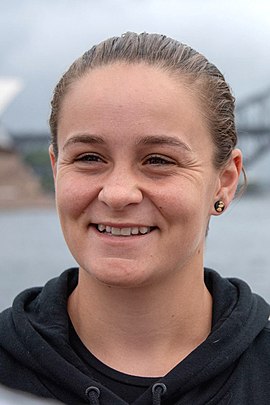
Ashley Barty
The other name that comes to my mind is Australian tennis champion and three-time Grand Slam champion Ashley Barty who announced her retirement in March last year, at the age of 25, just two months after winning the coveted Australian Open and being ranked number 1.

Nothing surprising about quitting when the chips are down. But to let go of positions and privileges when things are going reasonably well, and pivoting onto a different path with an entirely different set of priorities is something altogether different.

There is a mountaineering analogy here. After having ascended to a good height (literally and figuratively, definitely an achievement in itself) the climber might feel that s/he doesn't have the energy to go on further. 

That's when a decision has to be taken whether to "let go of the goal" and start climbing down or "carry on against the odds to reach the summit".

Is there a right time to quit or retire?

There is no one template that everyone can follow blindly. It's a personal decision of reprioritizing one's personal commitments and goals. 

Having said that, to call it quits "early" surely requires a fair amount of courage because letting go could be seen as "giving up", and giving up could be seen as a "defeat".

However, it's not what others think that matters. It's one's own comfort levels and priorities that matter.

As Jacinda Ardern said, "For me, it's time." Or, as Ashley Barty said, "It's right for me."

Thursday, October 27, 2022

Rishi Sunak and India

The announcement on Oct 24 of Rishi Sunak's appointment as PM was understandably big news in the UK.

In India too!

One, it was on Diwali, and coincidence was instantly picked up.

Two, he got married in Bengaluru in 2009, a celebrity event.

Three, the new PM's father-in-law Narayana Murthy, who co-founded Infosys, is a household name in Bengaluru. So much so that it was as if the next-door-neighbour had become the UK PM.

The Prime Minister's mother-in-law, Sudha Murty, is equally famous. A computer engineer, she is a very popular author of children's books, educationist, and philanthropist.

Not surprisingly, one of the jokes doing the rounds was that parents here have a new career goal and benchmark for the children! (See, what Rishi has become ...!")

On Oct. 24, soon after it was known who the next British PM will be, Vidyarthi Bhavan, the iconic restaurant here tweeted a photo of him at the restaurant.

(By the way, I had written about Vidyarthi Bhavan in an A to Z Challenge post last year.)

All this excitement in India will die down soon.

Hinduism and India are the last things on the new British PM's mind. 

He'll be extremely careful and not do anything that might be seen as being partial to the country his wife, Akshata, is a citizen of. Not to mention the controversies linked to her, which he seems to have survived for now.

Monday, September 19, 2022

So long!


Majestic and ceremonial. Dignified and elegant. Calm and solemn.

That's what the nearly 8-hour-long funeral and the last journey of Queen Elizabeth II was.

Something that I didn't want to miss; I saw the whole of it on the YouTube channel of Sky News.

My admiration for the queen grew multi-fold after I watched the Netflix series The Crown.

It's not just about the royal title of Queen. It's also about Elizabeth II as an individual, and as a woman.

There wasn't, and quite unlikely there will be, a monarch like her. 

She was pitchforked to the pinnacle of royalty at the young age of 25 in 1952. 

Look at how the world changed during the 70 years since then. 

While Britain and the world, battled one crisis after another, there she was, as a constant steadying influence and a source of reassurance and comfort for the UK and Commonwealth.

For everyone else, she was an inspiration, someone who personified admirable individual traits like commitment, sincerity, hard work, wisdom, equanimity, grace, poise, dignity, etc.

It's also interesting that in the UK, there was a change of guard within a span of few days, both in the government and the monarchy.

A new head of government. A new head of state. 

I am sure there will be changes in the months and years to come.

(Image courtesy: BBC)

Friday, April 29, 2022

Day 25 - Yugoslavia

Courtesy: Encyclopaedia Britannica 
(Click on image to enlarge)

Yugoslavia was one of the countries very familiar to Indians once upon a time.

Its Communist ruler Josip Tito was among the leaders, alongside India's Prime Minister Jawaharlal Nehru, who played a key role in the setting up of the Non-Aligned Movement or popularly called NAM.

NAM, established in Yugoslavia's capital Belgrade in 1961, wasn't formally aligned to either the West bloc led by the US or the East bloc led by the once-mighty USSR (Union of Soviet Socialist Republics) or the Soviet Union.

Late 1980s and early 1990s were tumultuous times. 

The biggest event then was the collapse of the USSR, with its impact felt worldwide including in India (the privatisation of Indian economy in 1991).

Yugoslavia -- which comprised six socialist republics: Bosnia and Herzegovina, Croatia, Macedonia, Montenegro, Serbia, and Slovenia -- was one of the first countries in East Europe to be impacted by the breakup of the USSR.

One by one constituents of Yugoslavia began declaring independence, starting with Slovenia and Croatia in 1991. 

The Yugoslav Wars, which broke out among the republics, resulted in the deaths / massacre / genocide of hundreds of thousands of people. 

Yugoslavia as a country was finally dissolved in 1992. But the ethnic tensions / violence / insurgency has continued.

--------------------

This post is part of the blogging challenge in April every year, wherein bloggers put up one post a day, from A to Z, every day except Sundays. 

I'm participating in #BlogchatterA2Z. I am also on A2Z April Challenge.

Monday, February 28, 2022

Russian invasion of Ukraine - Two questions

Screenshot of a video on BBC 

The way Russia was amassing troops on Ukraine's borders, and warnings by the US that "an attack was a possibility", what we are seeing now was quite a certainty.

There are a couple of questions for which I am yet to get convincing answers.

1) The move to get Ukraine into the NATO has been going on for now close to a decade. Why didn't the NATO admit Ukraine, if they really wanted to? Being a full-fledged NATO member is far different from just being an ally receiving economic and military assistance from the West.

By giving this crystal-clear signal to Russia that Ukraine is their ally, the West was also implicitly telling Russia: "We are at your doorstep."

After all these years, Ukraine has been practically left alone to defend itself. Though of course they are getting support from the West.

2) If you remember, in the days preceding the launch of the Russian attack, while the US and its West European allies were constantly talking about the fears of an "impending Russian invasion", Ukrainian President Volodymyr Zelenskyy himself was strangely cool and calm. 

In fact, multiple reports from Ukrainian capital Kyiv used to speak of how everything is absolutely normal; and no one believing that a Russian invasion would ever happen.

With all sophisticated intelligence-gathering mechanisms we have today, it's highly unlikely that Zelenskyy didn't know that an invasion would take place. They should have acknowledged that in some form.

That would have given foreigners a real picture of what was unfolding, and they could have left for their home country, or foreign governments could have evacuated their citizens well before things deteriorated to this extent.

Why did Zelenskyy give the impression that nothing untoward was ever going to happen? Was it part of a strategic game plan?

Now with airspace closed, evacuation flights are taking off from neighbouring countries. But not all are close to the borders. 

There is a reason I am saying this. Thousands of Indians, mainly medical students, are trapped in underground bunkers in Ukraine. With no basic amenities, and dire shortage of food and water, it's a physical and emotional trauma for them.

Of course a few hundreds have been brought back but thousands are still trapped. One medical student was pleading: "Please get us out of here before we die."

While I type this, we have news that Russian President Vladimir Putin has put his nation's nuclear deterrent on 'special alert'. This is obviously in response to the assistance that the West is giving Ukraine, which seems to be slowing down the Russian progress. 

Earlier today, UK Foreign Secretary Liz Truss told Sky News that the conflict would last a number of years.

That means the suffering isn't going to end to anytime soon.

Sunday, November 1, 2020

Countdown to chaos or decision?

Image courtesy: Pixabay
I hope it's the latter.

The day after tomorrow is the day, or rather the night. 

It's not for nothing US Presidential elections are keenly watched the world over. 

It's one of the oldest democracies and one of the most powerful nations in the world. Its dollar and military are still a force to reckon with. Its institutions are strong and resilient enough to withstand the frequent destabilizing forces that keep cropping up off and on. Its culture has a profound influence all over the world. 

TOO CLOSE TO CALL

That's a phrase we keep hearing on the election night, as winners for each State are announced by media organisations. 

(How strange everyone looks to the so-called "biased" media networks to declare - unofficially - who the winner is!)  

The popular opinion was that Donald Trump, during his four years of presidency, will script his own defeat. Let's accept this -- there is nothing so far (from the "unreliable" pollsters) to suggest this will definitely happen.

That means we are going to hear that phrase many times over on Nov 3 night and, who knows, well into the next day too.

The outcome might be uncertain, well in keeping with this year's pan-global theme. But the battle lines are crystal clear.  

CONTEST THIS TIME IS ON THESE LINES

  • Conspiracy theories vs Science

  • COVID-19 is a ploy to destroy America; don't panic and buckle vs COVID-19 is a disease; take care of your health as well as of others

  • Mask symbolises shackles and tyranny; wearing it won't prevent you from getting COVID-19 vs Wearing a mask is a recommendation of health experts to keep you and everyone else safe

  • Our well-being and health can't be at the cost of the economy vs It's possible to keep the economy running even while we take care of our well-being and health
     
  • People who disagree with you are all wrong vs People who disagree with you could be right

  • Recklessness vs Prudence

  • Don't think too much, act (you can correct later) vs Think through before you act (because by the time you correct, the damage is done.)

  • Reach your destination, don't bother about the road vs The road you take to reach the destination is equally important

  • Don't waste time waiting for consensus and to take everyone on board vs Getting as many people on board is important. Correctness and inclusiveness of decisions matter as much as the speed with which decisions are taken

  • Security and economy is more important than everything else vs Everything else is as important as security and economy

  • Only America and Americans matter, don't bother about the rest vs The rest of the world matters too

THE POSSIBILITIES

  • Narrow win for Trump (The show will go on)

  • Landslide win for Trump (The show will go on; the likelihood of more pomp and fury)

  • Landslide for Biden (The Red camp might smell a rat but the celebration in the Blue camp might overwhelm the shock in the Red camp)

  • Narrow win for Biden (The Red camp might smell a rat. But the worry is will they let emotions spill on to the streets?)

  • Counting disputed in one or many states (Court battles. If not long-drawn-out, the Supreme Court will declare the winner. Remember 2000? There is also the possibility of the contingent election. It has happened thrice: in 1801, 1825, and 1837. SG in his blog describes how it works and the interesting outcome it could throw up.)

MY DOUBT

If Trump loses, narrowly or by a wide margin, will he and his supporters be sporting enough to accept the verdict?

Friday, July 13, 2018

An eventful fortnight around the world

If one were to look across the world, the past fortnight has been unusually eventful. 

THAM LUANG CAVE RESCUE

Photo courtesy: BBC
Nothing of this sort has happened any time in the recent past. Amazing story of human endurance and resilience. On the 23rd of June, 12 members of a junior football team in Thailand and their coach enter a 10-km long complexly structured cave, which has, among other things, narrow passages and a permanent stream inside. As bad luck would have it, unrelenting rains ensue. Advancing waters drive the team inside in search of drier areas. Only on July 2, a team of British divers find them stuck deep inside the cave. On 8th, a rescue mission is launched. In four batches, all are brought out; the last one on 10th. There will surely be a film made on this.


JAPAN FLOODS, OVER 200 DEAD

Photo courtesy: BBC
I just couldn’t believe that as many as 200 people have lost their lives (over a few days) in torrential rains and consequent flooding in western Japan, the worst weather-related disaster in 36 years. The fact that it has happened in a developed nation which has good infrastructure and technological tools to predict such catastrophic weather changes, makes it all the more striking.


BREXIT TURMOIL HITS THERESA MAY

Photo courtesy: BBC
David Cameroon while electioneering in 2016 says if elected to power he will hold a referendum on Britain’s continuance in the European Union. And, see what has followed. Cameron wins; is reminded of the referendum; orders it; and to his surprise, Britain votes to leave the EU. The mess that followed hasn’t cleared still. A new low was reached when on July 8, Brexit Secretary David Davis quit and on the following day Foreign Secretary Boris Johnson quit, saying PM Theresa May is diluting the earlier Brexit promises. She has narrowly fended off a leadership challenge. 


US-CHINA TRADE WAR BEGINS

Photo courtesy: CNBC
US President Donald Trump, in his mission to make America Great Again, has been complaining to everyone in the world that America is being wronged in global trade, and that the US is losing while everyone else is gaining. (Let us not get into a discussion on that here.) One of his measures to right the past wrongs is to impose heavy duties on imports of many goods from China. Thus, on July 5, US tariffs on $34 billion worth of Chinese goods kicked off. The impact of that will be long-drawn out and felt across the world.


 FIFA WORLD CUP SEMIS SANS BIG TEAMS

Photo courtesy: The Hindu
Surprises are common in sports. But not the way it has happened during the ongoing World Cup football in Russia. Predictions of who will win and lose, have gone horribly wrong. For the first time ever, the semifinals were played without top teams like Brazil, Germany, Argentina, Spain, Uruguay etc. We will now have a final between France and Croatia on Sunday.

2018 FIFA World Cup (Wikipedia)

EXIT OF TOP SEEDS IN WIMBLEDON

Photo courtesy: BBC
Not just World Cup Football, Wimbledon too had surprises. For the first time ever, none of the top-10 seeded players reached the quarterfinals in the women’s section. Arguably the best player, Serena is there, but she is seeded 25. Today she is playing the final against Angelique Kerber.


ANYTHING MISSED?

So many other important / interesting events might have happened across the world. Have I left out anything?

Sunday, April 30, 2017

Don't be surprised if Le Pen wins on May 7

Marine Le Pen (Photo: CNBC)
Today, it's a week since the first round of French elections took place. Very much like what the opinion polls predicted, centrist Emmanuel Macron and far-right Marine Le Pen came on top.

Today, it's one week to go for the second and final round. After many years, we have a very tightly contested race for the next occupant of Palais de l'Élysée (Elysee Palace), the official residence of the President of France.

It's widely speculated that Macron will defeat Le Pen. But as the poll date nears, there are increasing indications that it will not be a cake walk for him. An Odoxa survey, a few days ago showed that the gap between the two had narrowed, and Macron's share of vote could be 59%, down four points. Marine Le Pen stands at 41%, up four points from earlier in the week.

Another poll by Harris Interactive, said that Macron will win: 61% to 39%. But he has lost ground in the past week to Le Pen: six percentage points.

Why the going might be difficult for Macron

On May 23rd, Le Pen got just 5% votes in Paris, but in five adjoining regions -- Grand Est, Hauts-de-France, Normandie, Centre-Val de Loire and Bourgogne-Franche-Comté -- she was the winner.
Emmanuel Macron (Photo: New Statesman)

There is a lot of support for far right views among the youth. The flood of immigrants and the changes that is bringing about in the society isn't to everyone's liking. Extreme right is seeking exit of not just refugees but even people of non-European and sometimes even non-French origin. Le Pen's FN party is no longer extreme right-wing, but many who are right and beyond are likely to back Le Pen rather than Macron.

She has support from not just youth of 18 to 24 years, but also among the working class and lower middle class. And these are not demographic bands that get widely represented in urban media. A good example of this was when she engineered a publicity coup by meeting striking workers of the Whirlpool factory at the picket gate of their factory in Amiens, while Macron was holding talks with union officials in the comforts of the building. The factory is facing closure after a number of jobs were outsourced to Poland. She said she will not let the factory close.

There is massive unemployment. It's around 10%. While it is 4% in Germany, and 5% in the UK. And this has been agitating the youth. In Round 1 on April 23, she won in areas that had high unemployment and low wages.

Similarity to Trump

There is an unmistakable similarity to what played out in the US in the runup to the November poll in the US. Everyone predicted Hillary will win, but Trump kept gaining steadily in opinion polls, which the media largely didn't take seriously. Le Pen too is gaining steadily.

Trump appealed to a vast number of blue-collar workers. So is Le Pen. And that is a good number in France too.

Many people think Macron will be indecisive in these times when tough decisions would have to be taken. They think he would just be another of those business-class elite would just go with the not-too-well-working system.

And now we have reports that Russian hackers have broken into Macron's campaign, much like what we heard about the Democratic campaign in the US.

The quiet voters

What might prove crucial is how supporters of left and far-left would vote. Its leader Jean-Luc Mélenchon who secured 19% votes last week, hasn't endorsed Macron. May 7 result will be affected if many his supporters decide to support Le Pen or even abstain, without voting for either.

Macron may have won Round 1, and all parties (except the Socialists) might be uniting behind him to prevent FN from coming to power. But does that imply that people too would unite similarly?

In other words, many voters who might theoretically be against Le Pen could support her. But since that's going to be "very politically incorrect" for them, they might not talk about it.

How ironic it would be, if most of Left abstains, and that catapults Marine Le Pen to Palais de l'Élysée.


References:

All the ways Emmanuel Macron could still lose the French election - Quartz, April 28, 2017

Le Pen GAINS ground as Macron support drops ahead of final vote -  Sunday Express,  Apr 28, 2017

Marine Le Pen closes the gap with Emmanuel Macron - Daily Mail, April 28, 2017

Macron heckled by pro-Le Pen workers - BBC, 26 April 2017

'Death of the French left': why voters are hesitating over Macron - The Guardian, 26 April 2017

Russian hackers 'target' presidential candidate Macron - BBC, 25 April 2017

Marine Le Pen wins just 5% of Paris vote while rural FN support surges - Independent, April 24, 2017

How the Election Split France - New York Times, April 23, 2017

'The real misery is in the countryside': support for Le Pen surges in rural France - The Guardian, April 21, 2017

Why does Le Pen get so much support from young voters? - Al Jazeera, April 20, 2017

Marine Le Pen’s surprise supporters - Politico, Jan 23, 2017

France unemployment rate - Countryeconomy.com

Sunday, April 23, 2017

French presidential poll 1st round result updates

(This was a live blog post)


1.20 am

Signing off for now. Will look forward to the final numbers tomorrow morning.

1.10 am
Interior Ministry puts Marine Le Pen ahead with 24.38% and Emmanuel Macron with 22.19%, François Fillon 19.63% and Jean-Luc Mélenchon 18.09, after counting of 20 million votes

12.55 an
Today's was a historical election, though we still don't have a new President of France until May 7. Historic because, the main parties that ruled France for almost 50 years have been eliminated.
The second and final round of election on May 7 will be a more bitterly fought one. The views of centrist Independent Macron and extreme right-wing Le Pen are vastly divergent. Immigration -- open border as opposed to closed border -- is going to be passionately debated. And the role of France in European Union and also the larger comity of nations will also come under the lens.

12.45 am
Marine Le Pen addresses supporters. Expresses gratitude to people for supporting her. Says survival of France is at stake.

12.40 am
Fillon has conceded defeat and urged his supporters to vote for Macron

12.30 am

Who is Emmanuel Jean-Michel Frédéric Macron
--  Born December 21, 1977
-- Senior civil servant and former investment banker at Rothschild & Cie Banque.
-- Member of the Socialist Party from 2006 to 2009.
-- In 2015, he stated that he was no longer a member of the PS and was now an Independent.
-- As Minister of Economy, Industry and Digital Data in 2014, he was at the forefront of pushing through business-friendly reforms.
Source: Wikipedia

12.15 am

Who is Marion Anne Perrine (Marine Le Pen):
-- Born on August 5, 1968
-- President of the National Front
-- Youngest daughter of FN leader Jean-Marie Le Pen
-- She is said to be more republican than her father and have more acceptance among people.
-- She expelled her father from the party on August 20, 2015
-- She changed some traditional views of FN, with support for same sex unions, abortion, and pulling out death penalty.

-- She was ranked among the most influential people in 2011 and 2015 by the Time 100.

Source: Wikipedia

12.05 am

Emmanuel Macron with 23.7% is slightly ahead of Front National leader Le Pen who has 21.7%. Official figures awaited.

11.55 pm

11.45 pm

Historic results, since the mainstream parties have been sidelined. Macron and Le Pen have 23% of votes. Fillon and Mélenchon have 19%. Benoit Hamon of Socialist party gets just 5%

11.35 pm

Emmanuel Macron leads, Marine Le Pen takes second place in French presidential election, according to early results from FRANCE 24’s partner Ipsos.

11.28 pm

After the disaster of predicting the US election results, which Donald Trump won in November last year, no is taking the risk of loudly proclaiming the possible winner today. Once bitten twice shy! But the above mentioned four are widely expected to end up on top.

11.27 pm

To win the election, the leading candidate has to secure more than 50 per cent of the total votes. Since there are 11 candidates it's highly unlikely that the winner will go past the half way mark. In that case, the top two will clash again on May 7.

11.20 pm

There are 11 candidate. The four most prominent among them span the whole spectrum:

1) Marine Le Pen of far-right National Front

2) Emmanuel Macron of centrist En Marche!

3) François Fillon, centre-right The Republicans

4) Jean-Luc Mélenchon, of far-left La France insoumise


11.15 pm

Brexit. Trump's victory. And now French elections. This is perhaps the most unpredictable French elections in modern times. A lot of focus on rising support for the right-wing and extreme right-wing parties. In September we will see the same unpredictable scenario playing out in Germany too. Polls close in 15 minutes time. And exit poll results should be coming in soon after that.